Our Services
The Divine Liturgy is the central worship service of the Orthodox Church and the very heart of our parish life. It offers worshippers the proclamation of the Word of God in prayer, hymns, Biblical readings and sermon, culminating with the celebration of the Eucharist (Holy Communion). In addition, the Ethiopian Orthodox Tewahido Church serves the faithful through the seven sacraments. These sacraments are called mysteries because the invisible grace of the Holy Spirit is granted through them. Taking the example of pillars as has been said in the Proverbs of Solomon as a starting point, our Church teaches that there are seven sacraments (Proverbs 9:1)…………
BAPTISM
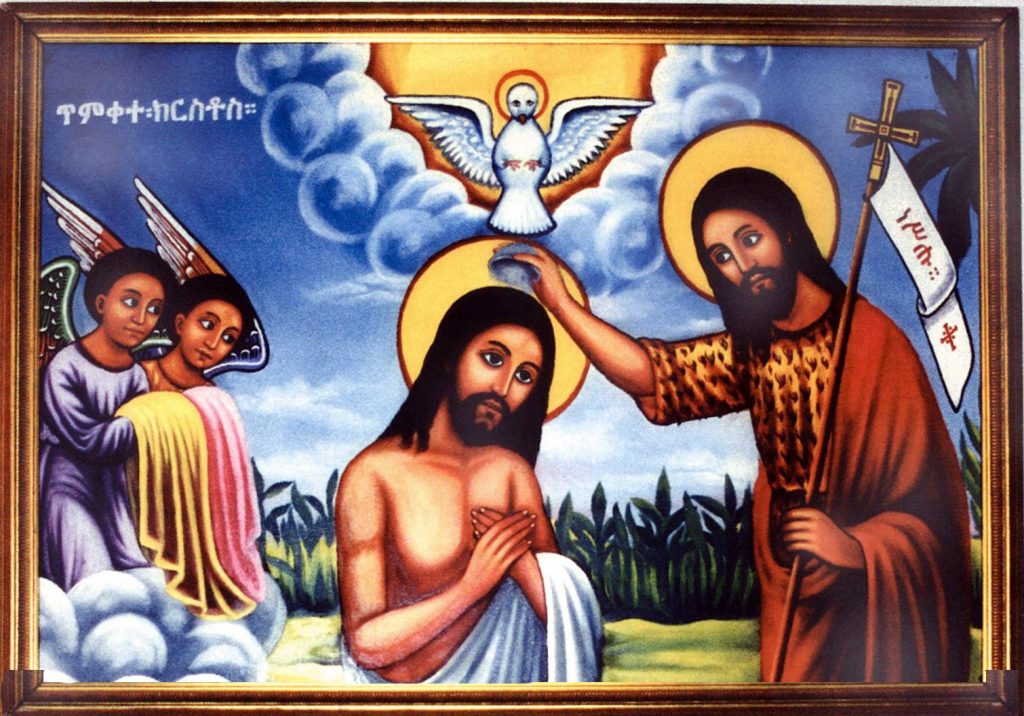
Of the seven sacraments, Baptism is the first. Baptism is the sacrament through which we are reborn and enter the Kingdom of God (Jn 3:5). Baptism has a Biblical basis (Mt. 28:19). Through Baptism sin is forgiven (Acts 2:8).
CONFIRMATION (MYRON)
It is the holy ointment that one is anointed with after Baptism. Confirmation, like Baptism, is performed once and cannot be repeated. Through the sacrament of confirmation, the believer is granted the gift of the Holy Spirit.
HOLY COMMUNION
Holy Communion is the culmination of all sacraments of the Church. Holy Communion means offering of sacrifice. This is not an offering of man to God, but the offering of God for man.
ORDINATION
This is the sacrament through which the clergy are entitled to perform the various spiritual services of the Church and it has Biblical basis (Mt. 28:19,20; Eph. 4:11; Acts 26:20).
HOLY MATRIMONY
Christian marriage is one of the seven sacraments, which is performed in a church by means of which the grace of the Holy Spirit is obtained. Holy Matrimony is based on the Bible (Gen. 1:27, 28,2:18; Mt. 19:4-6).
MYSTERY OF PENANCE
Penance means to feel remorse, repent and cleanse oneself from sin. Although Christians are reborn through Baptism, human beings are liable to commit sins. Therefore, every Christian should have a father confessor (Nesha Abbat).
UNCTION OF THE SICK
Unction of the sick is the Sacrament through which the priest anoints the body of the sick asking for divine grace to cure both body and soul. It is not an ordinary means of healing diseases and the healing power is not attributed to the oil but to the prayer. St. James mentions this Sacrament in his Epistle (Jas. 5:13-15, Mk. 6:13). Each of the Seven Sacraments has its own book of prayer and system of application. The Seven Sacraments as a whole are considered as manifestations of the faith and tenets of the religion of the Church.